Home as womb
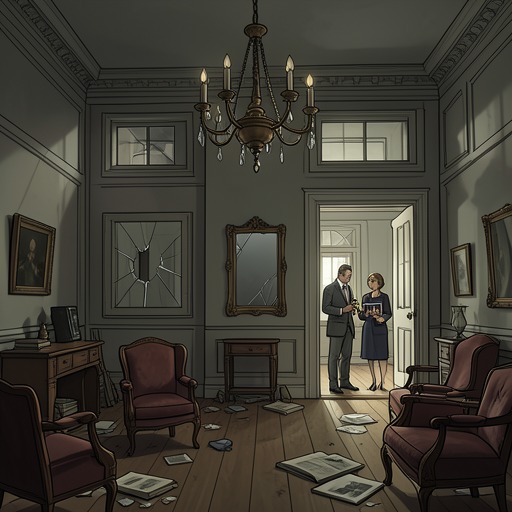
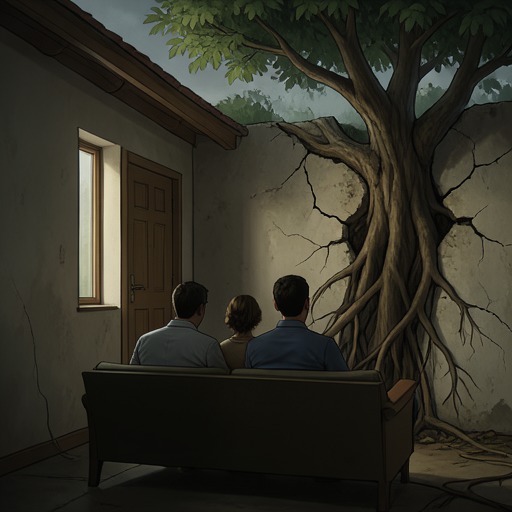
The War of the RosesHome as womb is a recurring image of domestic space as refuge: the familiar house can hold and soothe its inhabitants when family life has become painful. The image is not simple reassurance. For Oliver Rose, enclosure promises relief from anguish, while the family home’s familiar sounds and rooms offer comfort amid separation; elsewhere, the same house contains a conflict that the children fear and cannot escape.
The sauna as refuge
During a period of depression and isolation, Oliver Rose uses the sauna to drive away his distress. He lies in its small redwood room, where the heat and solitude make the space feel like a warm, comfortable womb in which anguish is not allowed. The sauna is not merely a setting for relaxation: Oliver relies on its repeated cycle of heat and cold water to renew himself and face the next day.
The intensity of this refuge is measurable. The thermometer reaches 200 degrees, and Oliver continues until it reaches the red danger point of 220. He treats the heat as a test of endurance and will, expecting the cold shower to restore him and obliterate his anxieties. But when he finally tries to leave, the door will not open. The room that has sheltered him becomes an enclosure he cannot immediately escape. The sequence gives the womb image a tension between comfort and confinement without erasing the relief Oliver has sought there.
The family home and its lost unity
For Oliver, the house offers a larger version of that private refuge. Alone in the canopied bed, he listens to familiar household sounds and registers the absence of Ann, Eve Rose, and Josh Rose. Their presence had given him a sense of belonging and cohesiveness; the house’s familiarity still comforts him, even while those absences make its emptiness tangible. He wonders whether Barbara Rose feels the same pull toward the house, imagining her across the hall, curled in an embryo position and listening too.
The domestic setting once represented shared family life, but the Roses’ separation changes what its familiarity can promise. Eve Rose recalls that her parents had seemed to have an exceptional relationship, doing things together and working on the house together. When Barbara Rose announces that she wants freedom to pursue her aspirations rather than remain an appendage, Eve Rose is shocked not only by the separation but by the possibility that her mother was unhappy. Ann, who knows more than she lets on, initially tries to treat the rupture as temporary and feels the impact of her own guilt. The house remains familiar; the shared life it once seemed to embody no longer feels secure.
A refuge under strain
The family’s distress spreads through the household rather than staying between the spouses. At first, the children try to bring their parents back together. As Barbara Rose and Oliver Rose persist in their hostility, that effort gives way to grudging acceptance. Eve Rose spends more time with friends, while Josh Rose finds solace in basketball and other sports and maintains contact with his father. These changes register a family adapting to the separation without recovering its former unity.
Eve Rose also tells Ann that she will not go to camp because she is afraid to leave her parents alone together. She asks Ann to keep that fear secret, explaining that the children’s absence might leave the adults to each other without anyone else in the house. To Eve Rose, the family seems no longer to exist as a family, although its members still live under one roof; she wishes they would sell the house and end the impasse. Home is therefore not a refuge for every occupant. Its shared walls hold the children close to the conflict they fear, even as the house continues to structure their family life.
Comfort, absence, and the image’s limits
Oliver’s return to the house makes the difference between physical shelter and human company especially clear. He listens for Benny, whose familiar greeting usually marks his arrival. With Ann and the children away, the house feels empty; when Benny eventually scratches at Oliver’s door and settles on the rug, Oliver feels relieved. The small ritual restores a measure of comfort, but it does not restore the missing family presence.
Later, Eve Rose’s fear sharpens the image’s darker edge. She asks why her parents have not called or written and insists that, whatever their differences, they are still her parents. Ann promises to find them and ask them to call, while privately needing to keep the children away from the house she regards as monstrous. The movement from Oliver’s comforting familiarity to Ann’s apprehension shows that the house cannot guarantee safety or unity. Its womb-like meaning belongs to a longing for shelter and belonging; the novel sets that longing against a home made emotionally dangerous by the conflict unfolding within it.